CONNECTIONS
The latest news and insights from the metroConnections community.
Planning Outdoor Events Without the Panic: The Importance of Pre‑Planning
May 15, 2026 // Event Services
If you’ve ever planned an outdoor event, you know the feeling: the excitement of a beautiful open‑air setting with gorgeous backdrops and branded activations… quickly followed by the overwhelming number of decisions that come with it. Lighting, vendor coordination, load in access, power, general flow, guest comfort, noise restrictions and the number one factor, weather! Your list is growing fast. And when every choice feels like it could make or break the experience, it’s easy to slip into decision fatigue.
But here’s the truth: outdoor events don’t have to be stressful. With the right pre‑planning, the right partners, and the right mindset, they can be some of the most memorable, immersive, and high‑impact experiences you’ll ever create.
At metroConnections, we’ve learned that the key to outdoor success is simple: prepare for the unpredictable, plan with intention, and design with purpose. Here’s how we do it—and how you can approach your next outdoor event with confidence instead of chaos.
Why Pre-Planning is the Secret to Outdoor Event Success
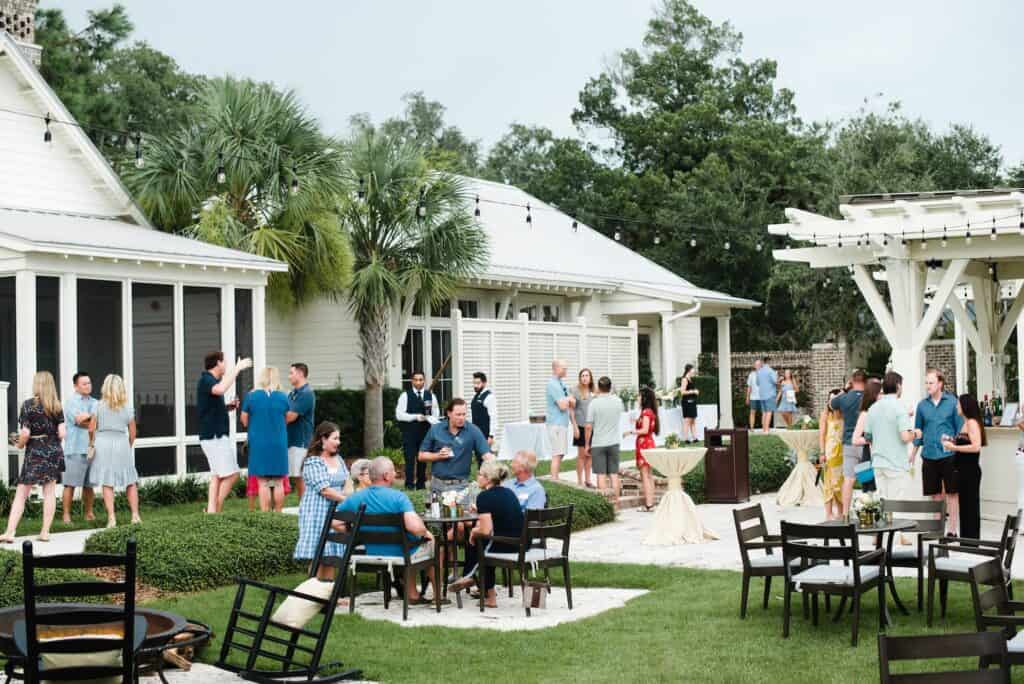
Successful outdoor events start long before the first guest arrives. Our pre‑planning process is designed to eliminate guesswork and build clarity from day one. We begin with strategic conversations to understand the event’s goals, audience, theme, and priorities.
From there, we conduct site evaluations—because outdoor spaces vary dramatically when it comes to access, terrain, and restrictions. These early meetings help us identify everything from how attendees will enter the space to whether the ground is level, where power can run, and what safety considerations need to be addressed.

“It’s not uncommon for our team to have Plan A and then a strategically pared down Plan B if the dreaded “weather call” must be made.” states Kalen Graf, Manager, Social Events. “We find out what is most important to our client and implement a plan to recreate this vision in the indoor space or under a tent. Our goal is to have minimal disruption to the esthetics while still delivering an impactful event”
Outdoor vs. Indoor Logistics: What Really Changes
One of the biggest differences between indoor and outdoor event logistics is accessibility. We assess how guests will reach the event area, whether the terrain may be uneven, and if additional lighting or safety measures are needed. For many outdoor events, we bring in a Technical Director early to evaluate lighting, power distribution, and structural needs. Noise restrictions also play a major role, especially in parks, waterfronts, or urban spaces where decibel limits can impact entertainment and programming.
Load‑in logistics is another major factor. Moving equipment across a park, up to a rooftop, or navigating through a busy street requires a detailed timeline and coordination with vendors, venues, and sometimes city officials. Even a venue’s rules can shift the entire plan. We may have plans to stake a tent in the ground but find out that we have to use water barrels to do so instead. These are the types of details that our team does not overlook.
Weather Planning: The Most Important Part of Outdoor Event Logistics
Weather is the most common challenge clients face when planning outdoor events, and it’s often the source of the most stress. The “weather call” can trigger second-guessing and last‑minute scrambling if there isn’t a clear plan in place. That’s why we integrate weather strategy into the planning process from the very beginning. We develop full tenting plans, backup layouts, and comfort solutions such as blankets, heaters, cooling stations, or shade structures. We consider the time of year, the region’s climate patterns, and the event’s schedule to anticipate potential issues.
Our team monitors weather closely leading up to the event and makes strategic adjustments based on real‑time conditions. While we can’t control Mother Nature, we can absolutely plan around her—and that preparation is what keeps events running smoothly. Our philosophy is simple: be prepared for the worst and hope for the best.
Look Books: The Visual Blueprint that Reduces Decision Fatigue
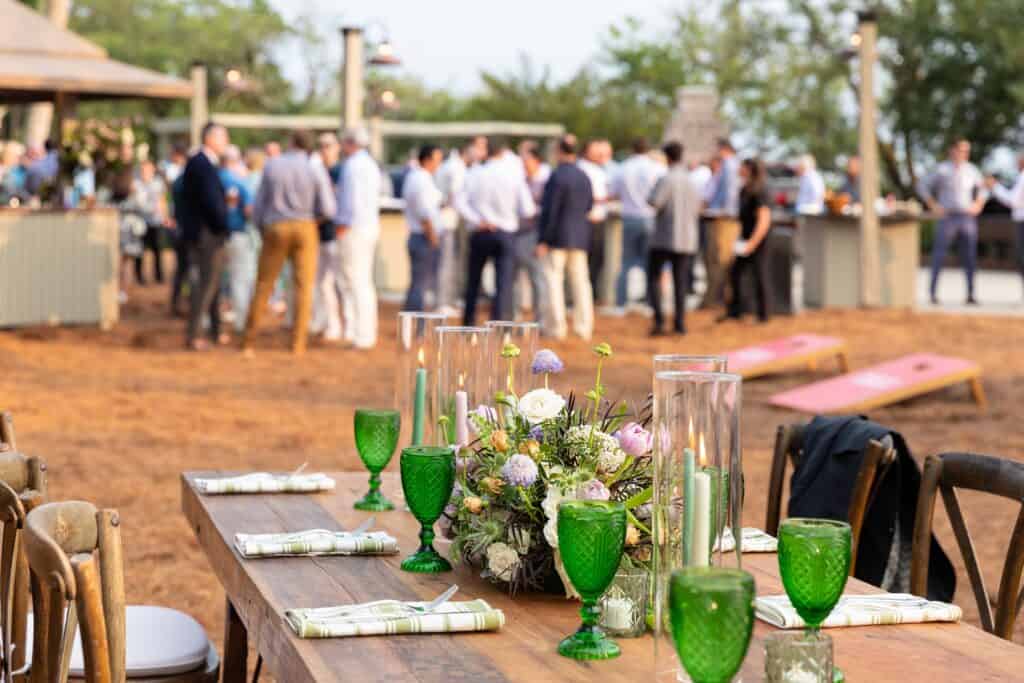
To help clients visualize their event and reduce decision fatigue, we create detailed look books. These look books outline décor direction, color palettes, layouts, guest flow, and key experience touchpoints. They give clients a clear picture of what the event will look and feel like long before load‑in begins. Look books also align with vendors, venues, and internal teams, ensuring everyone is working from the same vision. While not every event requires a look book, they are especially valuable for outdoor events where variables are higher and visual clarity is essential.
Common Outdoor Event Challenges and how we Solve Them
Outdoor events come with challenges that clients may not anticipate. Weather uncertainty is the most obvious, but guest comfort is equally important. We think through every detail—from water stations to seating options to temperature‑appropriate amenities—to ensure attendees feel taken care of.
Another challenge is balancing what the client wants with what attendees will actually enjoy. A desired design element may look stunning on paper but putting it into the elements without environmental consideration is a recipe for disaster. We help clients navigate these decisions with honesty and expertise, ensuring the final experience is both beautiful and functional.
“Our team has planned hundreds of events and has made thousands of decisions for these events so when it comes to “covering the bases”, we’re the grand slam.” Says Jade Prouty, Event Specialist. “Even choosing the cocktail table for a social hour can have up to 30 choices and we’re able to recommend which tables won’t blow over, which linen style to use, and so much more!”

Why Outdoor Events are Worth the Extra Planning
Despite the unpredictability, outdoor events offer unmatched opportunities for creativity and impact. They allow for large‑scale design moments, immersive activations, and a strong sense of place. When planned intentionally, outdoor events feel expansive, bold, and unforgettable. They invite guests into an experience that feels bigger than the event itself. And with the right team behind you—one that anticipates challenges, thinks on their feet, and prioritizes both vision and practicality—outdoor events become not just manageable, but extraordinary.

Sign Up For Our Newsletter
Creative Services
Event Branding Beyond the Main Stage: A Cohesive Experience From Arrival to Exit
metroConnections
metroConnections Announces Key Promotions Across Leadership, Creative, Technical, and Operations Teams
News