CONNECTIONS
The latest news and insights from the metroConnections community.
Event Branding Beyond the Main Stage: A Cohesive Experience From Arrival to Exit
September 15, 2026 // Creative Services
For a long time, the biggest focus of conference branding was the main stage. Companies spent most of their attention (and budget) on the ballroom, investing in massive screens, dramatic lighting, and scenic elements designed to create a big “wow” moment when attendees first entered the ballroom.
Today, the whole event is the stage — and companies need to be thinking about what attendees experience from the moment they arrive.
That creates a much bigger canvas for event branding. Instead of concentrating solely inside the ballroom, you can extend your brand across the entire attendee journey with interactive activations, custom environments, photo opportunities, demo stations, pop-up shops, digital experiences, and other moments that invite attendees to engage and participate.
Done well, this broadened scope for event branding creates a more cohesive experience that reinforces your message, gives you more opportunities to engage attendees, and makes the event (and your brand) more memorable.
What is event branding?
Event branding is the strategic use of visual identity, messaging, digital content, physical environments, and interactive experiences that shape how attendees encounter your brand before, during, and after an event. That can include everything from the event website and registration experience to signage, stage design, video, custom fabrication, and brand activations.
The most effective event branding extends beyond the main stage to every major attendee touchpoint, creating a continuous experience from arrival through departure.
Why event branding matters more than ever for marketing leaders
For event planners, cohesive branding creates a better attendee experience. For CMOs and other marketing leaders, there’s another layer: corporate events represent a significant opportunity for people to experience the brand in a way they simply can’t through an ad, email, or website.
Yet, historically, event branding concentrated heavily on the ballroom. Companies spent significant time and budget designing an impressive general session, only for attendees to walk out into a generic hotel lobby, an ordinary registration desk, and uninspiring hallways that could belong to any conference.
There’s nothing inherently wrong with an understated hallway. But it’s a missed opportunity.
Moreover, people are now accustomed to immersive retail, entertainment, and consumer experiences where virtually every detail of an environment is intentionally designed from beginning to end. If your event doesn’t live up to these standards, not only are you missing an opportunity to make a deeper impact — you may be creating a negative brand impression.
CMO event goals: What does success really look like?
The objective of cohesive event branding isn’t just to make your event look impressive at every turn. Event branding should be strategically designed to contribute to the key outcomes your organization is trying to achieve through the event.
Depending on the event, that might mean improving attendee engagement and satisfaction, strengthening brand perception, increasing product adoption, supporting sales opportunities or generating greater social and earned reach.
Let’s look at a few examples:
- At a national sales meeting, the goal may be to energize the organization around a new strategy or fiscal year. If the only place that strategy comes to life is on the keynote slides, you’re leaving opportunities on the table. Extending the theme into registration, networking spaces, interactive displays, and social events can reinforce the message throughout the entire program.
- At a user conference, event branding can help strengthen community and deepen the relationship between attendees and the company. Product demonstrations and hands-on experiences can make new capabilities tangible, while thoughtfully designed networking spaces encourage spontaneous conversations that often become some of the most valuable parts of the event.
- For product launches, galas and other high-profile events, memorable branded environments also create content opportunities that extend the life of the experience. A great photo moment or activation doesn’t end when the attendee walks away or flies home — it can become something they want to share.
The brand consistency challenge: Why branding breaks down beyond the main stage
The most common reason event branding ends at the ballroom doors is simple: The main stage and general session get designed first. By the time teams start thinking about the foyer, registration area, demo spaces, or networking environments, budgets are smaller and timelines are shorter. Those spaces receive whatever creative energy and resources are left.
Vendor fragmentation makes the problem worse. When you have signage, stage production, fabrication, and registration all coming from different vendors, every partner can be delivering excellent work, but separately briefed teams can interpret the brand slightly differently.
Then there’s the “same as last year” trap: Registration worked last year, so you use the same setup. The foyer had banners, so you just update the artwork with this year’s theme. The photo wall got decent engagement, so you change the logo and run it again. Over time, your event branding can become a collection of inherited tactics instead of an intentionally designed and cohesive experience.
The better approach is to think about the entire attendee journey before designing any one piece of it.
Six event branding ideas beyond the main stage
There are limits to event branding. Resources are obviously finite. Moreover, excessive branding can quickly become obnoxious for attendees. The goal is to identify the spaces where attendees naturally spend time and turn the right ones into meaningful extensions of the event.
Here are a few event branding ideas beyond the main stage:
Registration: Turn a checkpoint into a branded welcome
Registration is typically the first major onsite interactions attendees have at an event. If you’re just handing someone a badge, you’re missing a big opportunity. Branded registration environments can immediately establish the event’s visual identity, but the creative experience and the check-in experience need to work together. Even small design and planning decisions — from hard-to-read fonts on badgets and signage to poorly balanced alphabaetical check-in lines — can create unnecessary friction. The goal is registration that looks and feels distinctly on-barnd while making an attendee’s first “to-do” feel like the beginning of a great experience.
The entrance and foyer: Set the tone before attendees sit down
Attendees typically pass through the foyer multiple times a day — and people often naturally gather in these spaces between sessions — making it some of the most valuable (and least-utilized) event branding space at a conference. Instead of treating it as a hallway between sessions, think of it as part of the experience. Environmental graphics, custom installations, digital content, and experiential elements can introduce the event theme before attendees ever enter the ballroom.
Networking and recharge spaces: Brand the places people actually spend time
Some of the most valuable moments at conferences happen away from the stage. Attendees meet someone new while grabbing coffee. They compare notes after a breakout. They sit down to answer emails and end up having a conversation with someone they’ve wanted to meet all year. Lounges, charging areas, and other gathering spaces should be intentionally designed to encourage those interactions while extending the event’s brand into the moments between sessions.Moreover, these spaces represent incredible sponsorship opportunities: sponsors can connect their brands to positive experiences (instead of just slapping their logo on swag).
Demo stations and mini theaters: Bring ideas to life
Not every story belongs on the main stage. Sometimes, some of the most important content at an event doesn’t make sense for a general audience — whether it’s key topics aimed at a specific subset of attendees, subject matter that merits a deeper dive, or situations where more interactive engagement is the goal.
Demo stations, mini theaters, and smaller branded environments give attendees opportunities to explore products, hear from subject-matter experts, or engage more deeply with specific topics on their own schedule. Because these experiences are smaller and more focused, they can also create more direct interaction than a general session with hundreds or thousands of people in the room.
Photo opportunities and interactive activations: Create participation
There’s nothing wrong with a traditional photo wall, but a photo experience people genuinely want to interact with is better. What does that look like? Custom fabrication can turn a brand into something physical attendees can step into, touch, or explore, while interactive elements such as touchscreens, lighting, and other technical features can create more immersive experiences. One of the biggest challenges in bringing this kind of interactive brand activation to life is vendor fragmentation: cohesive experiences come together much more naturally when a single vendor can handle the full spectrum of fabrication, from concepting, engineering, materials and electronics to transportation and installation. This kind of end-to-end experience also adds perhaps the most critical layer: understanding how activations will actually translate from concept into the real-world space.
Pop-up shops: Make swag part of the experience
There’s a big difference between tossing a branded stress ball into a swag tote and inviting attendees to walk into a thoughtfully designed pop-up shop. Retail-inspired environments can turn merchandise into an experience of its own. Companies can create a branded destination where attendees interact with the brand in a more personal way.
How brand activation turns branded spaces into engaging experiences
What is brand activation? Here’s one way to think about it: Branding creates the environment. Activation creates participation.
Branding creates a beautiful space that establishes the mood of the event and reinforces brand identity, but adding something meaningful for attendees to do can turn that space into an experience.
Here are a few common examples of activation tactics that effectively drive attendee participation:
- Polls that invite attendees to weigh in and compare perspectives
- Live Q&A that lets attendees engage directly with subject matter experts
- Hands-on demonstrations that let attendees experience products firsthand
- Certification labs that turn learning into active skill-building
- Networking tools that help attendees make more meaningful connections
- Gamification that rewards exploration and engagement across the conference
Making content participatory
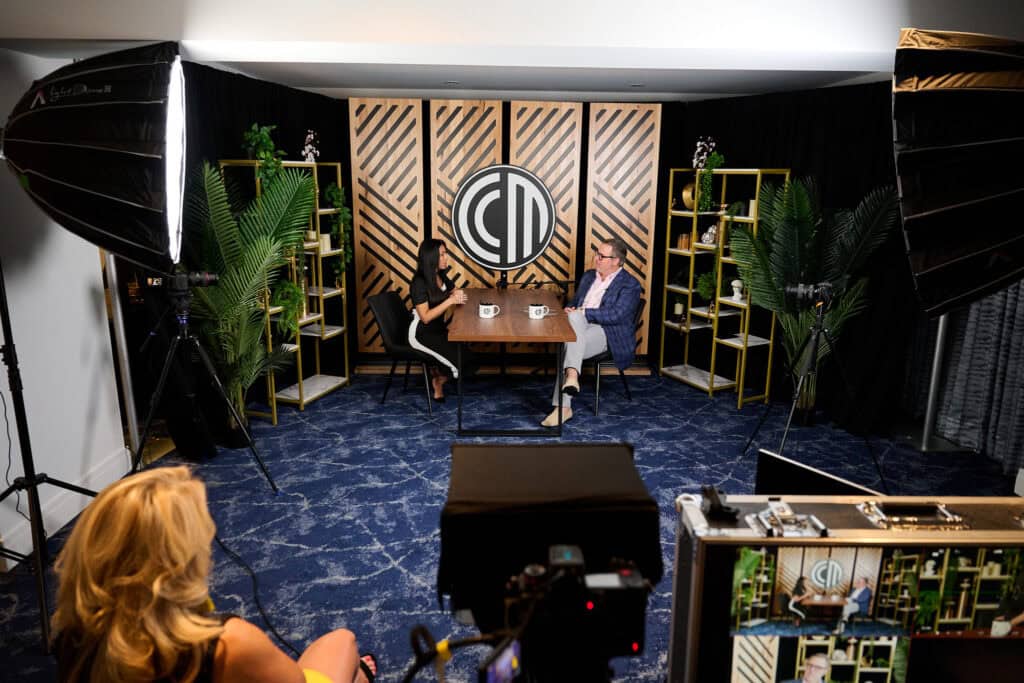
Content can become participatory, too. A live podcast studio, customer interview lounge, or photo-ready social activation can make attendees part of the content itself. When social reach matters (and, let’s be honest — it always does these days), those opportunities should be designed for sharing from the beginning rather than treated as an afterthought.
Personalizing event content can further deepen engagement. For example, a first-time attendee, longtime customer, corporate executive, and technical user may all walk into the same conference with very different goals. These unique attendees may benefit from tailored content, tracks, and experiences.
The main stage still matters: World-class content anchors the experience
The general session is still the place where the biggest messages are delivered and the largest shared moments happen. The difference is that the main stage should feel like the centerpiece of a larger brand experience instead of the only place where the brand comes to life.
That makes strong storytelling and high-quality visual content on the main stage as important as ever. Stage design, presentations, video, lighting and other production elements should work together to reinforce the event’s core message and create moments that capture attendees’ attention.
Just as importantly, creative concepts need to work in the real world. A design can look incredible in a rendering but fall short if it doesn’t account for sightlines, screen configurations, rigging, power, load-in requirements, and other production realities. Bringing creative and technical expertise together early helps ensure the experience is not only visually impactful, but also designed for the venue and audience from the start.
How to build a cohesive event branding strategy
The best time to think about branding beyond the ballroom is at the beginning of the creative process. Here are some key steps to planning for a cohesive event branding strategy:
1. Start by mapping the attendee journey.
Look at every major touchpoint from pre-event communications through arrival, registration, general sessions, breaks, demos, networking, social events, and departure. Where will attendees spend the most time? Where are the natural moments for interaction? Where could branding make the experience easier, more useful, or more memorable?
2. Establish one creative direction across the event.
A common theme, visual system and brand guide help ensure the website, stage, signage, fabrication, digital content, and activations all feel like parts of the same experience.
3. Bring production and fabrication into the conversation early.
The people responsible for building and producing the experience can help determine what’s feasible, identify opportunities you might not have considered, and solve technical challenges before the creative is locked. metroConnections’ fabrication process, for example, moves from discovery and concepting through design, engineering, build, transportation, and onsite installation.
4. Brief every partner on the same strategy and vision.
Brand consistency requires that all teams — from creative to registration staff, production crews, and other onsite partners — all work from the same common understanding of the purpose and vision for the event and attendee experience.
5. Prioritize the moments with the greatest impact.
How do you expand event branding without over-extending budgets or overwhelming attendees? Focus investment on high-traffic areas, high-dwell-time spaces, and the moments that are most critical to the event’s objectives. For example, branding registration and the foyer will impact nearly everyone. On the other end, a focused demo environment may reach fewer people but create much deeper engagement and more directly connect with business outcomes.
Why metroConnections is the right event branding and activation partner
Creating that kind of continuous experience gets harder when creative, production, and fabrication operate independently. That’s why metroConnections deliberately built our model differently. Our Creative Services team combines design, messaging, and strategy across event touchpoints, and our fabrication capabilities take custom environments from concept and engineering through transportation and installation.
Perhaps most importantly, our team’s deep experience bringing thousands of successful events to life gives us a hard-earned understanding of the practical realities of live production, so we can design event branding for the actual spaces and situations where it needs to perform.

“A lot of our clients only get this one chance a year to spread their integrated brand message to their employees, customers, or external vendors,” explains Phil Karatz, Vice President, Technical Services. “The look, the feel, the sound, we have to get all of these elements just right — and we put pressure on ourselves to make sure our clients’ stories have a positive impact.”
Dedicated Branding & Experiential services

With clients increasingly asking for more sophisticated branded experiences, metroConnections VP of Creative Services, Tom Hays, explains that the company recognized the need to “treat branding as a core discipline” for every event instead of an add-on service.
With clients increasingly asking for more sophisticated branded experiences, metroConnections VP of Creative Services, Tom Hays, explains that the company recognized the need to “treat branding as a core discipline” for every event instead of an add-on service.
That led to the formation of a dedicated Branding & Experiential practice within Creative Services, giving more structure and dedicated leadership to a discipline the company has already been delivering for years.
That strategic, tailored approach is translating into real-world results: For FMC Corporation’s Outdoor Farm Progress Show, metroConnections helped create an immersive brand experience across an event that attracted 150,000 visitors over three days, integrating stage scenic design, content development, video and branding across event components.
Frequently Asked Questions About Event Branding
What is event branding?
Event branding is the use of visual identity, messaging, content, digital touchpoints, and physical environments to create a consistent brand experience throughout an event. It can include everything from event websites and registration to signage, stage design, videos, activations, and custom-built environments.
Why is event branding important for conferences and events?
Event branding helps create a cohesive attendee experience, reinforces important messages, and makes the organization hosting the event more memorable. When branding extends across the attendee journey rather than appearing only on the main stage, every major touchpoint can contribute to the event’s broader goals.
What’s the difference between event branding and experiential branding?
Event branding establishes a consistent visual and verbal identity across an event. Experiential branding goes further by creating environments and interactions that allow attendees to actively experience the brand — for example, through custom installations, interactive activations, product demonstrations, or immersive branded spaces.
What does an experiential marketing agency do at a corporate event?
An experiential partner helps translate brand strategy into physical and interactive experiences. Depending on the program, that can include concept development, environmental design, custom fabrication, digital experiences, brand activations, technical planning, and onsite installation and execution.
Ready to extend your brand beyond the main stage?
metroConnections brings creative strategy, branding, production, and fabrication together to deliver cohesive experiences across the entire attendee journey — from the first impression at registration to the moments people are still talking about long after they leave.
Ready to bring your brand to life throughout your next event? Let’s start creating.

Sign Up For Our Newsletter
Creative Services
Event Branding Beyond the Main Stage: A Cohesive Experience From Arrival to Exit
metroConnections
metroConnections Announces Key Promotions Across Leadership, Creative, Technical, and Operations Teams
News