CONNECTIONS
The latest news and insights from the metroConnections community.
How to Reduce Corporate Event Costs Without Sacrificing Impact
July 27, 2026 // Insights
Corporate event teams are getting squeezed from both sides right now. Marketing budgets remain under pressure and internal teams are lean and getting leaner. At the same time, every line item — from room rates and food & beverage to AV and even Wi-Fi — has jumped up significantly, and planners expect costs to continue rising through 2026 and beyond.
Yet expectations are, if anything, rising. Leadership wants a can’t-miss experience that also needs to drive measurable ROI, and attendees are comparing every event to the best experiences they’ve had — not just other corporate meetings.
The focus needs to be on creating more value from every dollar you invest — and getting more out of every hour your team spends planning. And that starts with making a few key decisions early on in the planning process.
Consider this real-world example: a metroConnections client hosting a 1,000-person, two-day national sales meeting compressed the agenda by half a day, shifted to a mid-tier city, simplified stage design, and negotiated multi-year venue contracts — ultimately cutting per-attendee costs by 20% without losing a single keynote, sponsor activation, or networking reception.
The goal of this guide is straightforward: give event planners concrete tactics for threading the “do more with less” needle across the entire event lifecycle — meaningfully reducing costs while protecting the attendee experience, delivering sponsor value, and driving executive confidence that in-person events are worth the investment.
1. Define event priorities before you create the budget.
You can’t take a value-oriented approach to cost reduction if you haven’t clearly defined the value you hope to derive from an event. Before budget discussions can start, thoughtful planning means making sure you’ve answered the question, “What outcomes matter most?”
Your leadership team’s top priority might be launching a new strategy, deepening relationships with customers or partners, or strengthening internal company culture. Those priorities shape where cuts can be safely made — and what expenses are non-negotiable.
Just as importantly, getting alignment on priorities early is a strategic tool for reducing one of the biggest hidden costs in event planning: internal rework caused by shifting priorities and last-minute changes.
2. Build a realistic, transparent event budget.
Many organizations look to cut line items only after overruns appear. This reactive approach is one reason event budget overruns average 20% or more.
The better approach is to build a detailed, line-item event budget before a single vendor is contacted. Here are a few of our best practices for building your budget:
- Supplement current vendor quotes with historical spend (2024-2025 actuals), assuming inflation of 3-6% for most costs (F&B, AV, labor, etc.).
- Create a contingency fund of 10-15% of total spend to account for unexpected expenses, such as increased airfare, potential labor overtime or surprise attendee costs.
- Develop multiple budget scenarios that clearly show stakeholders what each investment level delivers.
At metroConnections, we typically manage a very scalable budget that can stretch in certain areas while allowing cuts in other categories. This helps executives make more informed decisions so there are fewer surprises when trade-offs become evident.

“We are always advocating on behalf of our clients.” says Amy McCullom, VP of Program Management “Our team ensures that we understand what the conference goals are and on behalf of our clients we negotiate on budget line items such as food and beverage or AV. Because we are an extension of our clients, they trust us to manage their budgets effectively and we take that role very seriously.”
3. Protect your team’s time like you protect your budget.
One of the biggest planning constraints is staff capacity. Many organizations are asking smaller marketing and event teams to execute the same number of meetings they managed with significantly larger staffs just a few years ago.
And the tedious logistics — managing vendor relationships, attending status meetings, updating spreadsheets, answering last-minute production questions, attending to consuming registration questions — end up sucking time away from focusing on strategy, content, and attendee engagement.
But internal event teams can meaningfully simplify the planning process by consolidating vendors, automating repetitive tasks, and working with end-to-end partners who can take on entire workstreams instead of individual deliverables.
At the end of the day, saving your internal team hundreds of planning hours can be just as — if not more — valuable as reducing the event budget itself.
4. Be strategic with venue and destination selection.
Venue and destination drive the single largest share of event expenses. In many programs, venue space (including food & beverage) accounts for 50–60% of total spend, so even modest savings here can move the needle dramatically.
Here are a few insider tips for evaluating destinations and venues:
- Mid-week or off-peak events: Booking mid-week or off-peak dates can lower venue costs by 15–25% compared to Thursday–Saturday patterns. Hosting events during off-peak times — spring or fall — further reduces room blocks, resort fees, and banquet minimums.
- Second-tier cities: Finding unexpected venue locations can lower expenses, too. Second-tier destinations like Denver, Dallas, or Charlotte often run 20–30% less than major hubs, while venues in those cities can deliver the same quality. Destinations with strong public transportation can also help reduce attendee and shuttle-related travel costs.
- Built-in resources: Choosing venues with built-in resources can save money across multiple line items at once — avoiding rental fees for things like AV equipment, furniture (tables, chairs, basic staging), and Wi-Fi service.
- Green venues: “Green” venues often provide discounts for sustainable practices, which is a win-win for your budget and ESG goals.
- Multi-year contracts: Multi-year vendor contracts can secure lower rates, locking in room blocks and concessions across several programs.
Most of metroConnections’ clients take advantage of our destination management and venue sourcing expertise (powered by HelmsBriscoe) to help identify cost-effective properties that align with their event priorities and brand image.
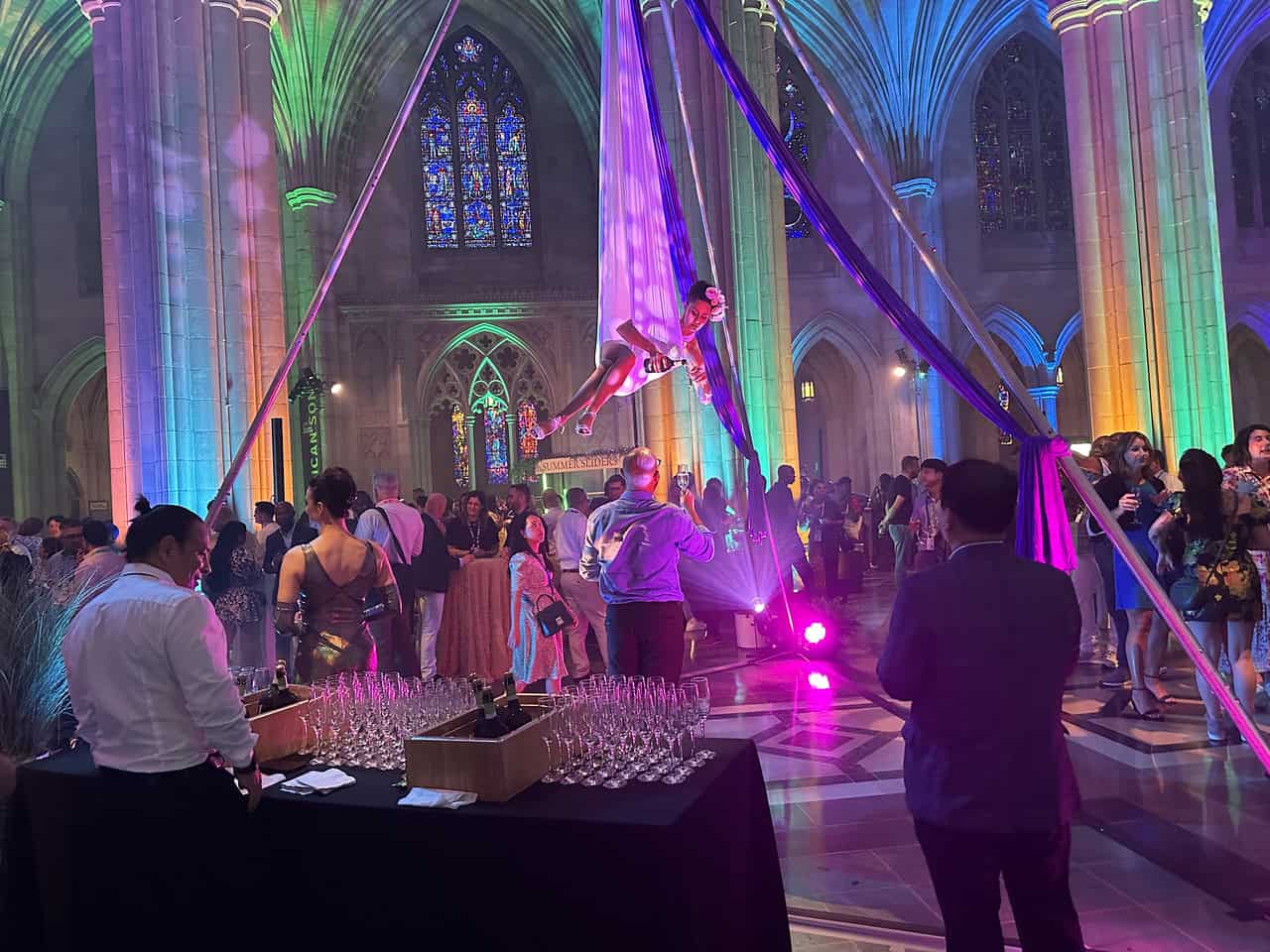
5. Right-size your agenda, space, and event schedules.
Beyond the destination and venue, the size and duration of your event is perhaps the next most notable decision that shapes costs. Every extra hour on your event schedule translates directly into incremental costs for AV techs, security, housekeeping, registration staff, and transportation crews. And while venues and vendors may offer volume-based price breaks that lower per-attendee costs, more people still require bigger budgets.
Here are some right-sizing strategies and tips we share with our clients:
- Many organizations are discovering that shorter, more intentional meetings actually improve attendee engagement while reducing costs. Shortening event durations simultaneously lowers expenses across all those categories. Consider compressing from a 3.5-day format to 2.5 intensive days: You eliminate a full hotel night, reduce food & beverage functions, and cut staging hours.
- Smaller gatherings can reduce costs while increasing engagement. Sometimes trimming the invite list to the right attendees produces better outcomes than filling a ballroom.
- Another common strategy is to consolidate regional meetings into one national program — reducing venue and staffing costs by eliminating duplicate setups.
- Validate actual attendance before locking in room blocks, catering guarantees, and exhibit floor size. For example, free registration events see 30–40% no-show rates, so use progressive RSVP tracking and signed confirmations to prevent over-buying.
- Adjusting meals — such as shifting from a full breakfast plus lunch to an extended brunch, or starting general sessions later to skip a morning meal — can deliver significant cost savings, while ensuring attendees never go hungry at your event.
- In-person events have returned as the default, but hybrid events can maintain quality while reducing costs by extending reach to remote attendees without paying for their travel and accommodation.
One of the more creative, customized services that metroConnections provides is to map attendee flow and event elements across the full event schedule to identify high-impact touchpoints and trim low-value sessions, asking key questions like: Could breakout sessions be consolidated? Would attendees benefit from a more focused schedule? Could networking opportunities replace lower-value presentations? This more tailored right-sizing helps to ensure your budget focuses money where it matters most.

6. Control food & beverage costs without hurting perception.
Food & beverage typically represents 30–40% of total event costs — and it’s long been the most volatile line item. Over 70% of event planners found food & beverage costs higher than expected in recent years, making this a prime target for smart cost control. But a low-quality F&B experience can have an outsized impact on attendees’ perception of your event.
Here are some of metroConnections’ proven tactics for reducing F&B costs without sacrificing F&B quality:
- Menu matching: Design menus so ingredients overlap across meals to tighten purchasing and lower overall food waste. Restricting menus to essential items reduces catering expenses, and choosing locally sourced ingredients (while avoiding premium imports) reduces food costs and carbon footprint while supporting local businesses.
- Format choices: Buffets allow better management of portion sizes than plated service and often cost less per head. Food trucks can also be a fun, cost-effective option for more casual meals.
- Bar strategy: Event planners can reduce bar spend by 20-35% by limiting hosted bar hours and other creative strategies like offering signature cocktails instead of full premium bars or hosting wine/beer-only receptions. Using drink tickets or reducing beverage options can also decrease bar costs without attendees noticing a major difference.
- Get smart with right-sizing: Use consumption data from past events to right-size portion counts, which helps with minimizing waste as well as avoiding over-guarantees. If only 60% of attendees eat breakfast, don’t guarantee food for 100%.
Catering and food service professionals are perhaps the best source of ideas and strategies for reducing F&B costs. metroConnections routinely partners with hotel culinary teams and catering vendors to develop customized plans for preserving perceived value through presentation and service style while lowering per-head spend. Better control of these high-cost items can also cut costs without hurting guest perception.
7. Specify only the production and stage design you need.
One-quarter of event budgets typically go toward stage production and AV, making this category worth careful scrutiny. AV and stage production frequently inflate event costs through overbuilt scenery, unnecessary lighting rigs, and union labor minimums.
Below are tips to right-size production:
- Separate “must-have” production elements — sound, basic stage lighting, a central screen — from “nice-to-have” additions like elaborate LED walls or custom architectural scenic.
- Right-size equipment to your room and audience rather than defaulting to the biggest rig available.
- Consider venue labor requirements early, factoring in any union labor requirements that may impact potential production costs.
Work with a company like metroConnections where they can help build a stage environment that can dramatically change from the standard general session “look” to an immaculate awards nights with little to no additional investment. metroConnections typically helps our clients save 15-30% through our in-house stage design and production instead of hotel-mandated AV. Our team controls crew scheduling, freight, and equipment delivering better rates and better quality under one roof.
8. Consolidate event technology, registration, and check-in.
Running event registration, email marketing, mobile apps, and virtual platforms on multiple platforms creates overlapping licensing fees, training costs, and integration headaches. Forrester reports that 3 in 4 event planners use five or more event technologies — and a survey from Bizzabo found that 67% plan to address this tech fragmentation in the next year to save time and money.
Simplifying the event planning tech stack can deliver several meaningful benefits, from reducing the need for multiple subscriptions to elimination functional duplication between your registration system, check in kiosk, and communication suite. A unified event management platform can streamline operations and reduce errors across the full planning process. Moreover, making the jump to a modern event management platform typically drives efficiency simply because it’s easier for staff to use, cutting training time and reducing manual workarounds.
These are just some of the reasons that many metroConnections clients choose to use our Attendee Services solutions with platforms that bring key capabilities like attendee registration, breakout choice signup and personalized agendas into one connected ecosystem.
9. Optimize staffing, labor costs, and vendor management.
Event labor costs rose 3–4% in 2025 alone, and that pressure continues. Unmanaged labor costs — for event staff, AV techs, transportation crews, and registration teams — can blow up an otherwise sound event budget. Below are tips for staff and vendor management:
| Staff Management |
- Build detailed production schedules that align staff call times with actual agenda needs.
- Avoid unnecessary expenses like early load-in calls or idle crew hours to mitigate overtime charges.
- Use contract staff if possible for low-risk tasks like wayfinding, attendee assistance, question and answer sessions, and check in support at large internal meetings.
| Vendor Management |
- Negotiating with multiple vendors helps secure better deals on every line item.
- Consolidating vendors increases purchasing power for negotiations, and bundling services can lead to better vendor rates, especially when creative, production, and transportation come from a single partner.
- Paying suppliers upfront can sometimes yield discounts of 3–5%.
- Multi-year vendor contracts can secure lower rates across multiple events.
- Long-term vendor relationships can stabilize budgets and reduce costs, and long-term vendor relationships can secure lower rates and perks over time.
metroConnections helps our clients outsource attendee management while keeping control through our single Program Manager model that centralizes communication, catches cost issues early, and eliminates the duplicate markups that come with juggling five or six separate vendors.
10. Design logistics for efficiency.
Shipping, freight, storage, and material handling costs often receive less attention than major budget categories — but they can quickly become significant, especially for conferences and roadshows. Below are insights from metroConnections’ logistics experts on how to make design choices for greater efficiency:
- Design scenic, digital signage, and exhibit elements to be modular, lightweight, and reusable across programs spanning multiple years.
- Early shipping and consolidated crates cut rush fees and storage charges.
- Digital signage reduces printing costs and waste. Look to replace thick printed materials with digital signage and QR-code content hubs to reduce both shipping and onsite distribution costs.
- Add recycling programs for signage, printed pieces, and other leftover materials to support waste reduction and possible disposal savings.
- Rethink heavy “swag” giveaways. Lightweight, eco-friendly branded items reduce transportation costs and handling charges.
One metroConnections client saved 20–30% in material handling and freight costs by converting printed signage to digital screens and reusing branded backdrop installations across a three-year annual conference series. Those savings were reinvested in higher-impact event elements.
11. Use data & insights from this year to cut next year’s costs.
Cost control gets sharper over time when you use post-event data instead of guesswork. Close analysis can identify high-impact event expenses and separate what aspects of the experience that attendees valued from what went unnoticed.
Of course this starts with ensuring you’re capturing key data, starting with:
- Detailed cost-per-attendee figures
- Session attendance vs. capacity
- Food & beverage consumption vs. guarantee
- Sponsor ROI metrics
- Registration patterns
- Attendee satisfaction
After the event, compare your planned vs. actuals to refine your next event budget.
Make sure you share clear, visual budget summaries with executives. When stakeholders see exactly where money went and what it produced, they’re far more willing to support strategic cost cutting for the next cycle.
metroConnections helps our clients take a more data-driven planning approach, leveraging our conference management solutions to recommend where to reinvest or trim spend-turning raw data into a plan that delivers meaningful results.
Why the right event partner makes all the difference
Smart cost cutting is about strategy and structure, not simply slashing line items. You can save money across venues, production, technology, and logistics — but it takes expertise to do it without sacrificing the event quality your clients and attendees expect.
Moreover, building a strategy for effectively doing more with less requires an expert partner that understands your business and can reliably align investments with your key priorities from a business and brand perspective.
That’s why metroConnections works as an extension of our clients’ organizations — not simply another contractor executing individual tasks. Our dedicated Program and Project Managers invest the time to understand your goals, your culture and your business priorities. From venue sourcing and registration to transportation, event décor, production, logistics and onsite execution, we bring every element together under one coordinated strategy.
Our ultimate goal is to create a better event. Cost savings are just a byproduct of our experience and expertise, helping us focus your investments so you get more value out of every dollar.
Ready to plan your next event with a budget that delivers? Contact metroConnections to build an event budget for your next customer conference, sales kick-off, or leadership summit that reduces costs, protects impact, and stretches every dollar toward the event goals that matter most.

Sign Up For Our Newsletter